
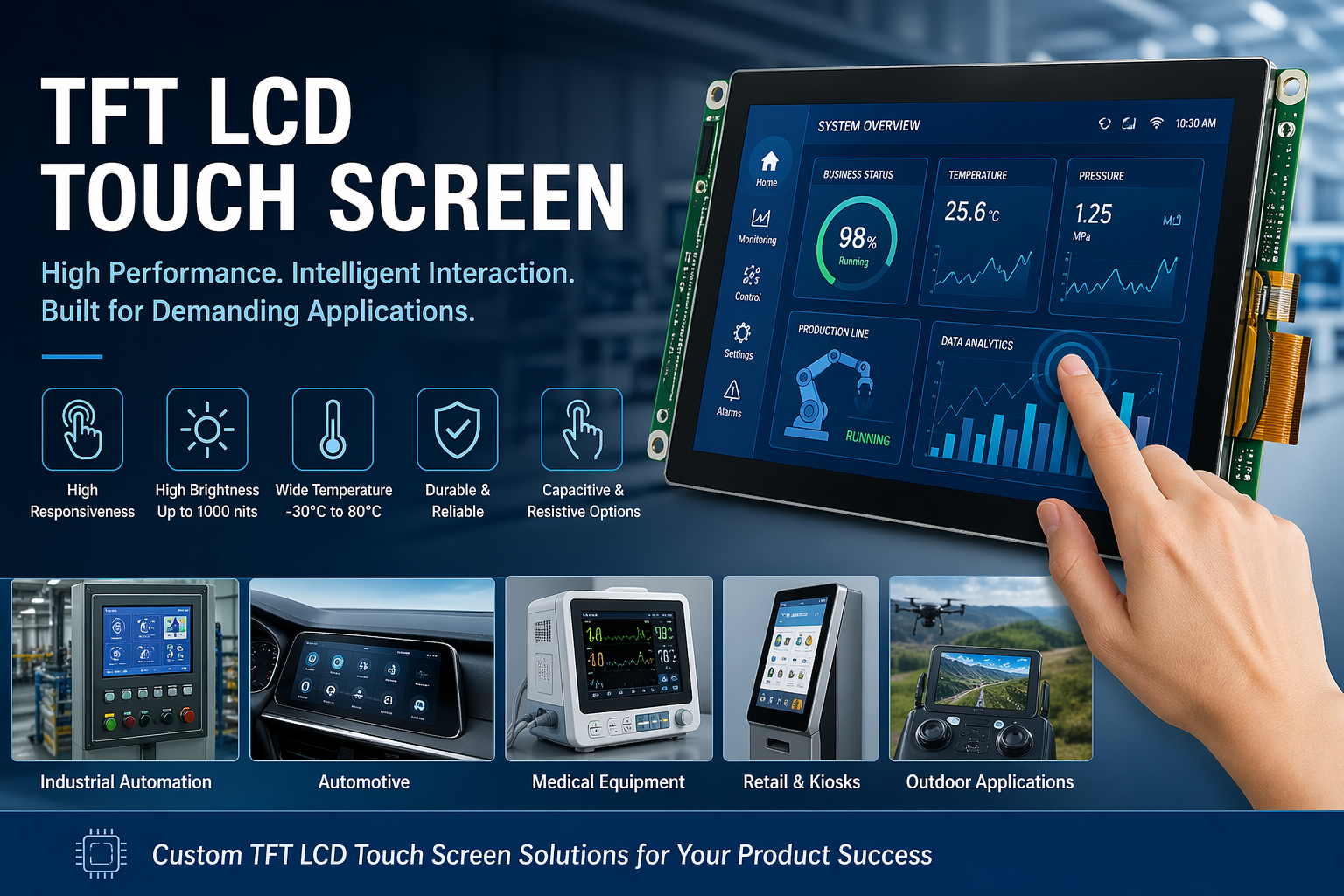
In today’s interactive world, touchscreens are no longer optional—they are essential. From industrial control systems to medical devices and automotive displays, TFT LCD touch screens have become the standard interface for modern equipment.
By combining high-quality visuals with intuitive touch functionality, these displays enable faster operation, improved user experience, and reliable performance in demanding environments.
This guide explains how TFT LCD touch screens work, their key advantages, and how to choose the right solution for your application.
What Is a TFT LCD Touch Screen?
A TFT (Thin-Film Transistor) LCD touch screen integrates two core components:
TFT LCD panel – delivers high-resolution images, accurate colors, and fast refresh rates
Touch panel – enables user interaction through touch input
Unlike traditional displays, TFT technology uses an active matrix, allowing each pixel to be controlled independently. This results in:
Sharper images
Better contrast
Faster response time
When combined with touch technology, it creates a seamless human-machine interface (HMI).
Types of Touch Technologies
Choosing the right touch technology is critical, especially for industrial and outdoor applications.
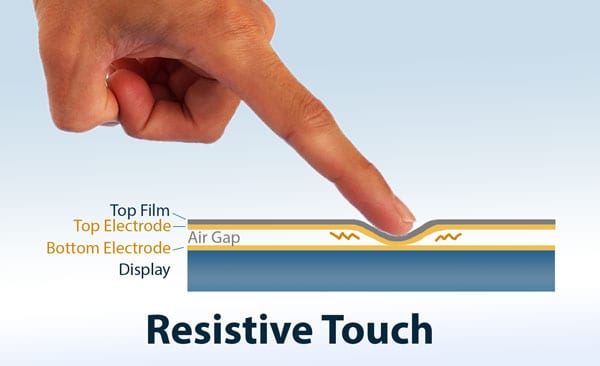
1. Resistive Touch Screen
- Works by detecting pressure
- Can be used with gloves, stylus, or any object
Cost-effective and reliable
Best for:
- Industrial control panels
- Harsh environments
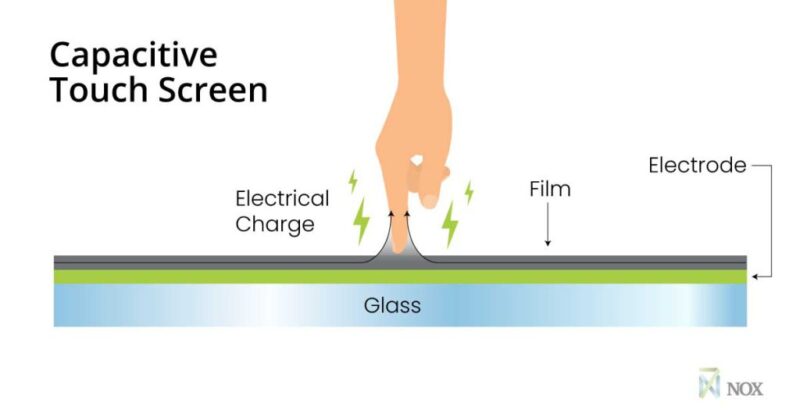
2. Capacitive Touch Screen
- Detects electrical conductivity from human touch
- Supports multi-touch gestures
- Smooth and responsive
Best for:
- Consumer electronics
- Smart home systems
3. Projected Capacitive (PCAP)
- Advanced version of capacitive touch
- Supports multi-touch with high precision
- Works through thick cover glass
Best for:
- Industrial equipment
- Automotive displays
- Outdoor kiosks
Key Benefits of Industrial TFT LCD Touch Screens
High Responsiveness
Modern TFT touch screens provide fast and accurate touch response, enabling smooth interaction such as swipe, zoom, and multi-touch gestures.
Superior Image Quality
With resolutions up to 1920×1080 and beyond, TFT displays deliver:
- High contrast
- True color reproduction
- Clear visibility
This is essential for applications like medical imaging and industrial monitoring.
High Brightness & Sunlight Readability
Industrial displays can reach 800–1000 nits brightness, ensuring visibility even under direct sunlight.
Ideal for:
- Outdoor equipment
- Vehicle dashboards
- Marine applications
Wide Temperature Range
Many industrial TFT LCD modules support -30°C to 80°C, ensuring stable performance in extreme environments.
Durability and Reliability
Designed for long-term use, these displays offer:
- Anti-scratch glass
- EMI shielding options
- Vibration resistance
Flexible Customization
TFT LCD touch screens can be fully customized:
- Interface: MIPI, LVDS, HDMI, RGB
- Touch: capacitive or resistive
- Size: from 3.5” to 21.5”+
- Optical bonding / anti-glare / anti-fingerprint
Applications of TFT LCD Touch Screens
Industrial Automation (HMI)
Used in control panels for:
- Real-time monitoring
- Data visualization
- Equipment control
Operators can interact efficiently—even while wearing gloves
Automotive Displays
Widely used in:
- Infotainment systems
- Digital dashboards
- Navigation screens
High brightness and wide temperature support ensure reliability in vehicle environments
Medical Equipment
Common in:
- Patient monitoring systems
- Diagnostic devices
- Imaging displays
High clarity and precision are critical for accurate readings.
Retail & Self-Service Kiosks
Interactive displays improve user engagement in:
- POS systems
- Ticket machines
- Digital signage
Consumer Electronics
Used in:
- Tablets
- Smart home control panels
- Portable devices
How to Choose the Right TFT LCD Touch Screen
When selecting a display, consider the following:
1. Environment
- Outdoor → high brightness + waterproof
- Industrial → wide temperature + durability
2. Touch Type
- Gloves needed → resistive or industrial PCAP
- Multi-touch → capacitive
3. Interface Compatibility
Ensure compatibility with your system:
- MIPI (mobile/embedded)
- LVDS (industrial)
- HDMI (plug-and-play systems)
4. Optical Requirements
- Sunlight readability
- Anti-glare coating
- Optical bonding
Future Trends in TFT LCD Touch Technology
Higher Refresh Rates
Displays are evolving toward 120Hz and beyond, improving smoothness in dynamic applications.
In-Cell Touch Integration
Combining touch and display into one layer:
- Thinner design
- Better optical performance
Energy Efficiency
Optimized backlight and power management reduce energy consumption in always-on systems.
Flexible Display Designs
Emerging technologies allow curved and flexible TFT displays for innovative product designs.
Conclusion
TFT LCD touch screens have become a core component in modern electronic systems, offering a powerful combination of visual performance, touch interaction, and reliability.
From industrial automation to medical devices and automotive systems, these displays continue to evolve—delivering smarter, more efficient user interfaces.
Looking for a Custom TFT LCD Touch Screen Solution?
As an experienced manufacturer, we provide:
- Industrial-grade TFT LCD modules
- High-brightness and wide-temperature solutions
- Capacitive and resistive touch integration
- Full OEM/ODM customization
Contact us today to discuss your project, request samples, or get a competitive quote.

