
Industrial displays are widely used in HMI systems, medical devices, embedded control units, and automation equipment. Unlike consumer screens, industrial displays prioritize long lifecycle, stability, sunlight readability, and compatibility with legacy systems.
One of the most important factors when selecting an industrial TFT LCD display is choosing the correct size, resolution, and aspect ratio. These parameters directly impact UI design, system integration, and long-term product reliability.
In this guide, we will break down the most common industrial display sizes, explain their typical resolutions and applications, and help you choose the right display for your project.
Table of Contents
What is an Industrial Display?
Common Industrial Display Sizes & Specifications
Aspect Ratio in Industrial Displays
How to Choose the Right Display Size
Industrial Display vs Consumer Display
Common Applications
FAQ
Conclusion
What is an Industrial Display?
An industrial display is a TFT LCD or similar display module designed for demanding environments such as factories, medical systems, transportation, and embedded equipment.
Compared to consumer displays, industrial displays offer:
- Wide temperature support
- Long-term supply stability (5–10+ years)
- Higher reliability and durability
- Better compatibility with legacy systems
- Customization options (touch, brightness, interface)
They are commonly used in:
- HMI (Human Machine Interface)
- Industrial control systems
- Medical monitoring devices
- Automotive and EV systems
- Smart home control panels
Common Industrial Display Sizes & Specifications
Below are the most widely used industrial display sizes, along with their typical resolutions, aspect ratios, and applications.
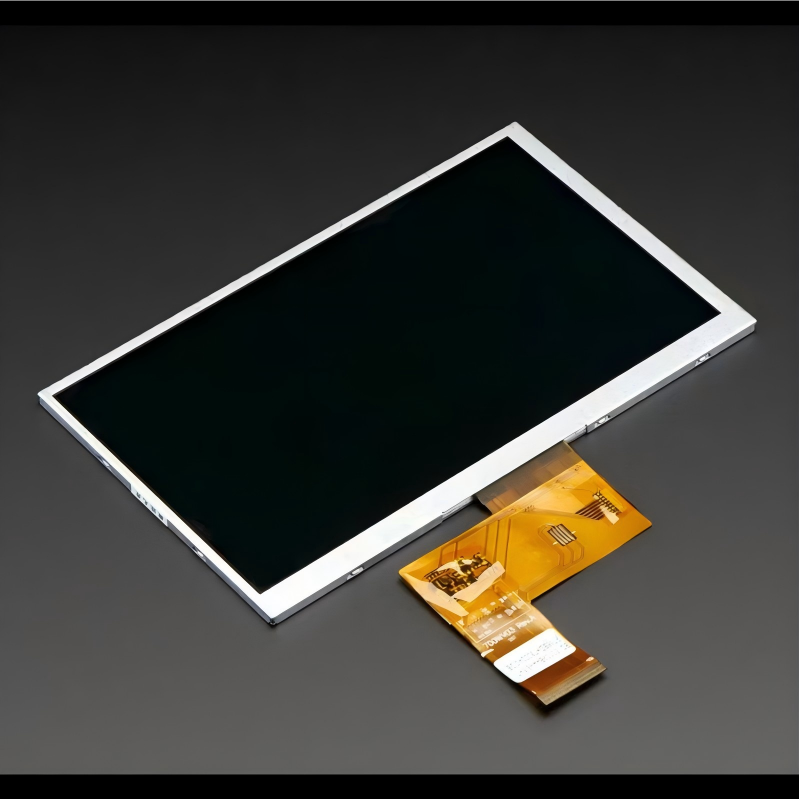
5.0 Inch Display
Resolution: 800×480 (WVGA)
Aspect Ratio: 16:9
Typical Use: Handheld devices, compact HMI
This size is ideal for portable industrial devices and entry-level control panels. It offers a good balance between cost and usability for simple interfaces.
7.0 Inch Display (Mainstream Choice)
Resolution: 800×480 / 1024×600
Aspect Ratio: 16:9 / 16:10
Typical Use: HMI systems, industrial panels
The 7-inch display is one of the most popular sizes in industrial applications due to its cost-effectiveness and versatility.
It is widely used in:
- Factory automation
- Smart control panels
- Entry-level medical devices
8.0 Inch Display
- Resolution: 800×600
- Aspect Ratio: 4:3
- Typical Use: Legacy systems, medical devices
This size is commonly found in older industrial equipment and systems requiring a square interface layout.
8.4 Inch Display
- Resolution: 800×600
- Aspect Ratio: 4:3
- Typical Use: Industrial panels, embedded systems
The 8.4-inch display is a classic industrial size and remains widely used due to long-term availability and compatibility with legacy software.
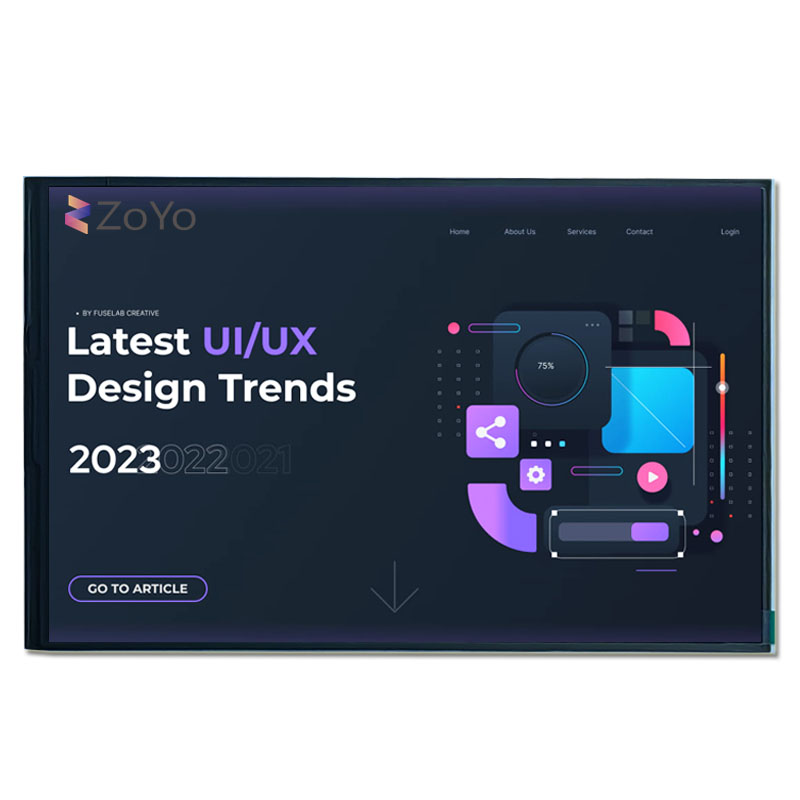
10.1 Inch Display
- Resolution: 1280×800 / 1024×600
- Aspect Ratio: 16:10 / 16:9
- Typical Use: Modern HMI, smart home systems
This is a modern display size commonly used in new-generation HMI systems.
It offers:
- Better UI flexibility
- Higher resolution
- Modern interface design compatibility
10.4 Inch Display
- Resolution: 800×600 / 1024×768
- Aspect Ratio: 4:3
- Typical Use: Traditional industrial control
This size is heavily used in traditional industrial environments where 4:3 aspect ratio is required.
12.1 Inch Display
- Resolution: 1024×768
- Aspect Ratio: 4:3
- Typical Use: Industrial monitors, medical equipment
A standard size for professional-grade equipment, offering a larger viewing area while maintaining compatibility with legacy systems.
15.0 Inch Display
- Resolution: 1024×768 / 1366×768
- Aspect Ratio: 4:3 / 16:9
- Typical Use: Large control panels, medical systems
This size is suitable for more complex interfaces requiring more screen space.
Aspect Ratio in Industrial Displays
Aspect ratio plays a critical role in industrial display selection.
Why 4:3 is Still Dominant
Many industrial displays use a 4:3 aspect ratio, such as:
- 8.4 inch
- 10.4 inch
- 12.1 inch
This is because:
- Legacy HMI software is designed for square layouts
- Industrial systems have long product lifecycles
- UI redesign costs are high
Wide Screen (16:9 / 16:10) Trend
Modern systems are shifting toward:
- 7 inch
- 10.1 inch
Benefits include:
- Better UI flexibility
- More modern design
- Improved multimedia capability
Important Note: Pixel Geometry
Some 800×480 displays may use non-square pixels, which can affect display geometry and UI rendering.
This is especially important for:
- Precision interfaces
- Measurement displays
- Medical systems
How to Choose the Right Industrial Display
Choosing the right display involves more than just size.
1. Application Scenario
Handheld → 5.0 inch
Standard HMI → 7.0 inch
Legacy system → 8.4 / 10.4 / 12.1 inch
Modern UI → 10.1 inch
2. Software Compatibility
If your system uses legacy HMI software, a 4:3 display is usually required.
3. Resolution Requirements
Higher resolution provides:
Better image clarity
More UI elements
Improved user experience
4. Interface Compatibility
Check supported interfaces:
LVDS
RGB
MIPI
HDMI
5. Environment Requirements
Consider:
Temperature range
Brightness (sunlight readable)
Touch type (capacitive vs resistive)
Industrial Display vs Consumer Display
| Feature | Industrial Display | Consumer Display |
| Lifespan | 5–10+ years | 1–3 years |
| Temperature Range | Wide | Limited |
| Customization | High | Low |
| Supply Stability | Long-term | Short-term |
| Reliability | High | Medium |
Common Applications
Industrial displays are used across multiple industries.
Industrial Automation
PLC control panels
Factory HMI
Robotics systems
Medical Equipment
Patient monitoring
Diagnostic systems
Portable medical devices
Smart Home & IoT
Smart control panels
Home automation systems
Automotive & EV Systems
Dashboard displays
Control systems
FAQ
What is the most common industrial display size?
7-inch and 10.4-inch displays are among the most widely used in industrial applications.
Why are 4:3 displays still used?
Because many legacy systems and HMI software are designed for square interfaces.
Is 10.1 inch replacing 10.4 inch?
Yes, in many new projects, 10.1 inch wide displays are gradually replacing traditional 4:3 displays.
Does resolution matter in industrial displays?
Yes. Higher resolution improves UI clarity and usability.
How long do industrial displays last?
Typically 5
10 years or longer, depending on the application.
Conclusion
Industrial display selection is not just about size—it involves understanding resolution, aspect ratio, application requirements, and long-term system compatibility.
While traditional 4:3 displays like 8.4", 10.4", and 12.1" remain dominant in legacy systems, modern applications are increasingly adopting wide-screen formats such as 7" and 10.1".
Choosing the right display ensures:
Better system performance
Lower redesign costs
Improved user experience
Long-term product stability
Looking for Industrial Display Solutions?
If you are selecting a display for your next HMI, medical, or embedded project, choosing the right size and specification is critical.
We provide:
- TFT LCD Displays (5"–15")
- High Brightness Displays
- Capacitive & Resistive Touch Solutions
- Optical Bonding
- Long-term supply support
Our engineering team can help you choose the most suitable industrial display based on your application.
Contact us today to discuss your project.

