
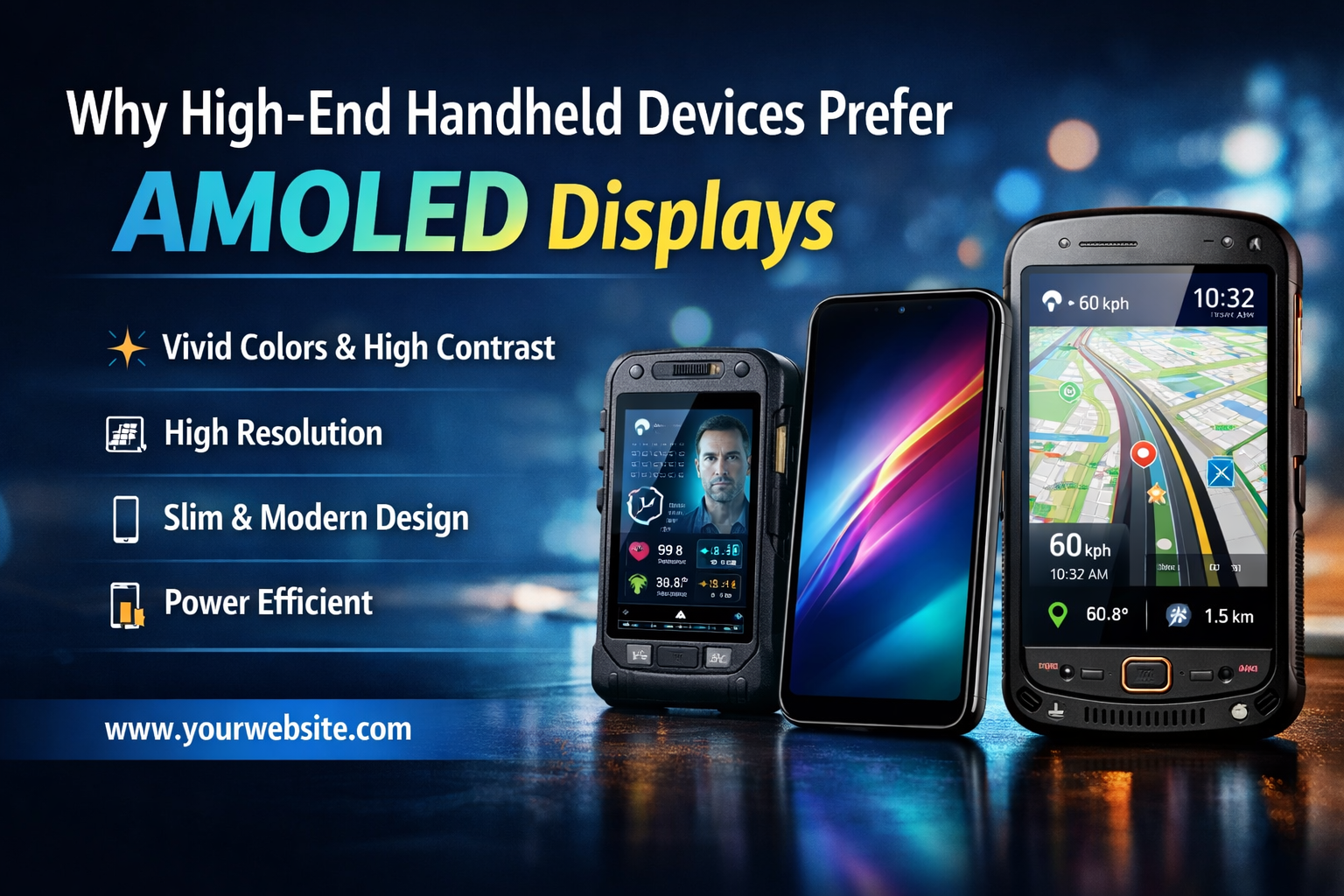
In recent years, high-end handheld devices—from industrial PDAs to medical terminals and smart control units—have been rapidly evolving. Users no longer accept basic display performance; they expect smartphone-level visual experience, sleek design, and better power efficiency.
As a result, more and more premium devices are switching from traditional LCDs to AMOLED displays.
But why is AMOLED becoming the preferred choice? And is it always the right solution?
Let’s break it down.
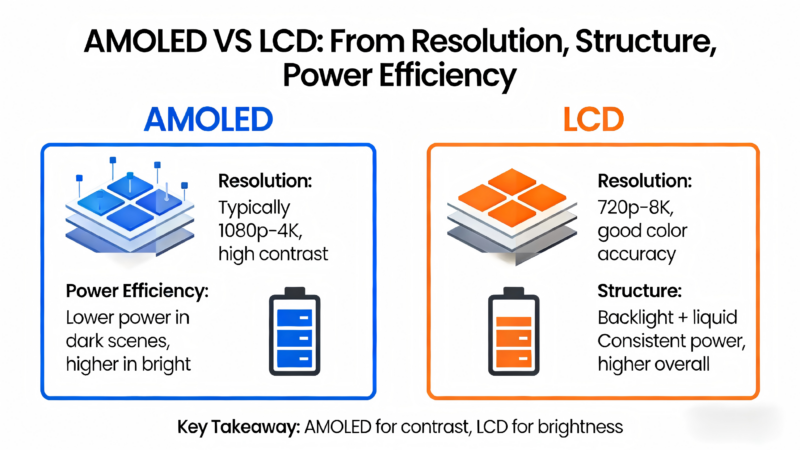
1)Superior Visual Experience
One of the biggest reasons manufacturers choose AMOLED is its outstanding display quality.
Unlike LCDs that rely on a backlight, AMOLED pixels emit light individually. This allows for:
True blacks (pixels can turn completely off)
Ultra-high contrast ratios
More vibrant and saturated colors
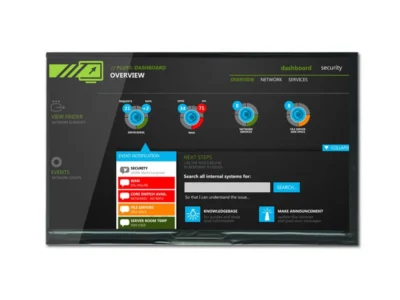
For handheld devices with graphical interfaces—such as dashboards, data visualization, or medical readings—this results in a sharper, more premium user experience.
2)Higher Resolution and Better Detail
AMOLED technology is well-suited for high pixel density (PPI) displays.
This means:
Sharper text and icons
Better readability for complex data
More refined UI rendering
For applications like:
Industrial handheld terminals
Smart healthcare devices
Portable testing equipment
…where screen clarity directly impacts usability, AMOLED provides a clear advantage.
3)Thinner and More Flexible Design
Another key benefit of AMOLED is its structural flexibility.
Because it does not require a backlight layer, AMOLED displays can be:
Thinner
Lighter
Flexible (in some designs)
This enables manufacturers to create:
Slim, modern-looking devices
Narrow bezels
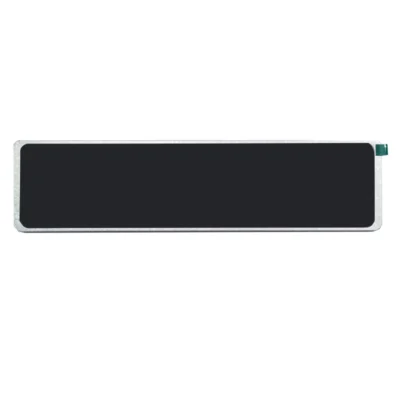
Custom shapes (round, curved, or bar-type displays)
For high-end products, design is no longer optional—it’s part of the value proposition.
4)Power Efficiency (Under the Right Conditions)
Power consumption is a critical factor for handheld devices.
AMOLED can be more energy-efficient than LCD, especially when:
Dark mode UI is used
Large portions of the screen display black or dark colors
Since each pixel emits its own light, inactive pixels consume almost no power.
However, it’s important to note:
AMOLED is not always more efficient—bright or white-heavy interfaces can actually increase power consumption.
Still, with proper UI optimization, AMOLED can significantly improve battery life.
5)A “Premium Standard” in Product Positioning
Beyond technical advantages, AMOLED also plays a role in product perception.
Today, AMOLED is widely associated with:
Flagship smartphones
High-end consumer electronics
By adopting AMOLED, manufacturers signal that their product is:
More advanced
More modern
Higher value
For many B2B devices—such as medical or industrial handhelds—this perceived quality can influence purchasing decisions just as much as performance.
6)Limitations of AMOLED Displays
While AMOLED offers many benefits, it is not without drawbacks. Understanding these is critical when selecting the right display.
Higher Cost
AMOLED panels are generally more expensive than LCDs, especially for small and medium-sized custom applications.
Burn-in Risk
Static images displayed over long periods can cause image retention (burn-in).
This is particularly relevant for:
Industrial control interfaces
Devices with fixed UI layouts
Lifespan Considerations
Organic materials degrade over time, which may lead to:
Brightness reduction
Color shift
Performance in Harsh Environments
In extreme conditions (e.g., very low or high temperatures), AMOLED may be less stable compared to industrial-grade LCDs.
7. When LCD Might Still Be the Better Choice
Despite the growing popularity of AMOLED, LCD remains highly competitive—especially in industrial applications.
LCD may be a better option when:
The device operates in extreme temperatures
High brightness (sunlight readability) is required
The UI is mostly static (reducing burn-in risk concerns)
The project is cost-sensitive
Long-term supply stability is critical
In these scenarios, LCD often provides better reliability and cost performance.
8. How to Choose Between AMOLED and LCD
There is no one-size-fits-all answer. The right choice depends on your application.
Choose AMOLED if you prioritize:
Premium visual experience
Slim and modern design
High-resolution UI
Brand positioning
Choose LCD if you need:
Durability and long lifespan
Stable performance in harsh environments
Higher brightness for outdoor use
Better cost control
Conclusion
AMOLED is not just a display technology—it’s a strategic choice for high-end product design.
It delivers superior visuals, enables innovative form factors, and enhances perceived value. That’s why more premium handheld devices are adopting it.
However, it is not always the best solution for every application. In many industrial scenarios, LCD still offers unmatched reliability and practicality.
Need Help Choosing the Right Display?
If you're not sure whether AMOLED or LCD is the best fit for your project, feel free to reach out.
We can help you evaluate:
Application environment
Interface requirements
Cost targets
Long-term supply strategy
Get in touch for a professional recommendation tailored to your project.

